


CBSE Capacity Building — Experiential Learning
4 topics
For parents
Session 01

Together we shape every child’s future.
Parent orientation
Orientation runs before the session begins, not in the first week of it. The difference matters: a family that arrives already knowing the timetable, the staff and the way the year is organised spends September settling a child in rather than working the school out.
It is a working session rather than a welcome speech. You walk the building your child will use, meet the people who will teach them, and leave with the handbook and the dates in your hand.

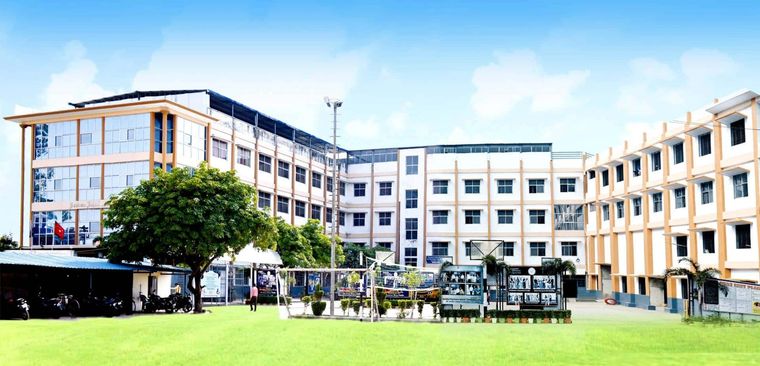
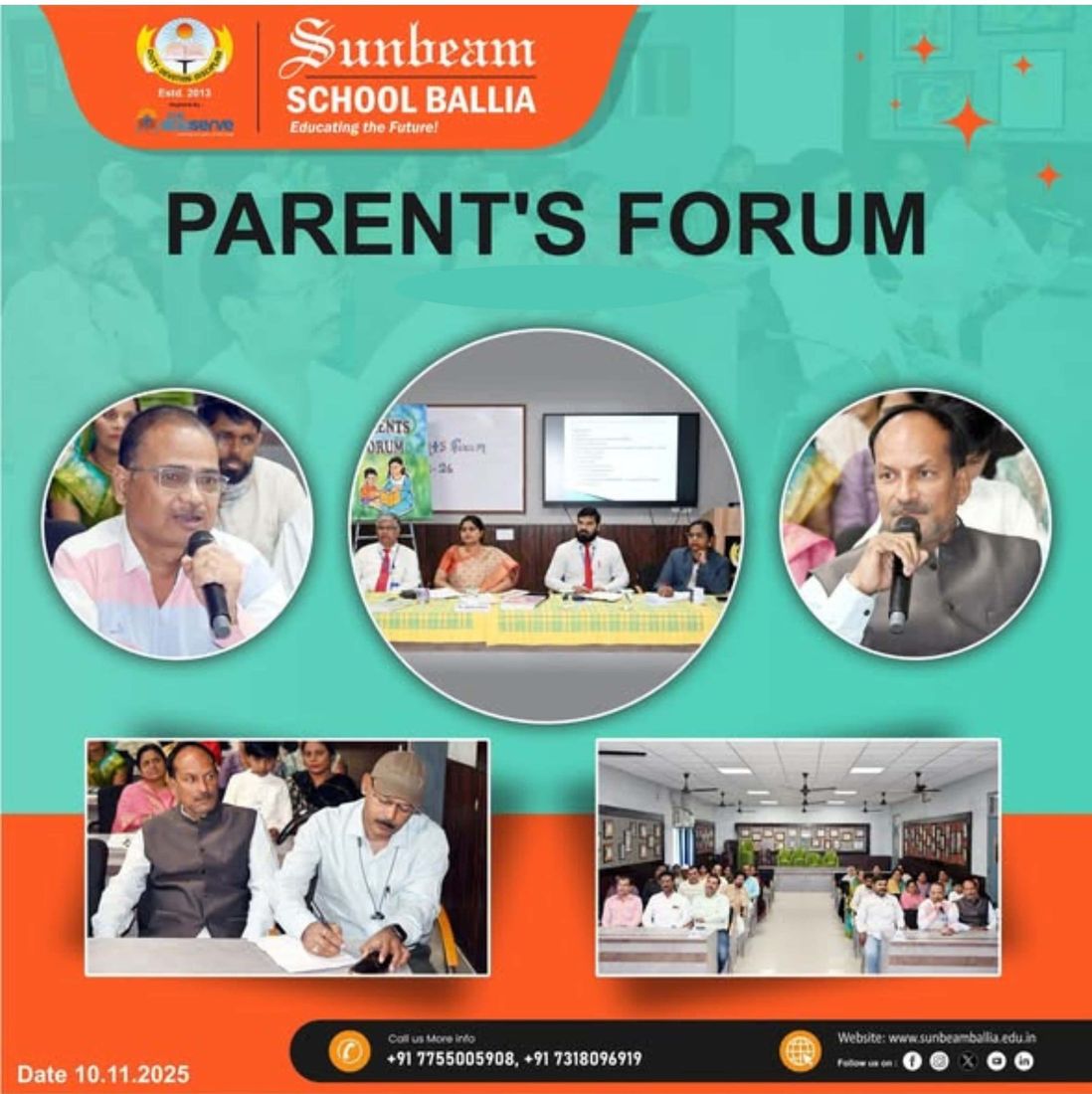
Parents’ forum
A parent–teacher meeting answers one question: how is my child doing? The forum answers a different one — how is the school doing? — and it is the only channel where parents raise things collectively and get an answer on the record.
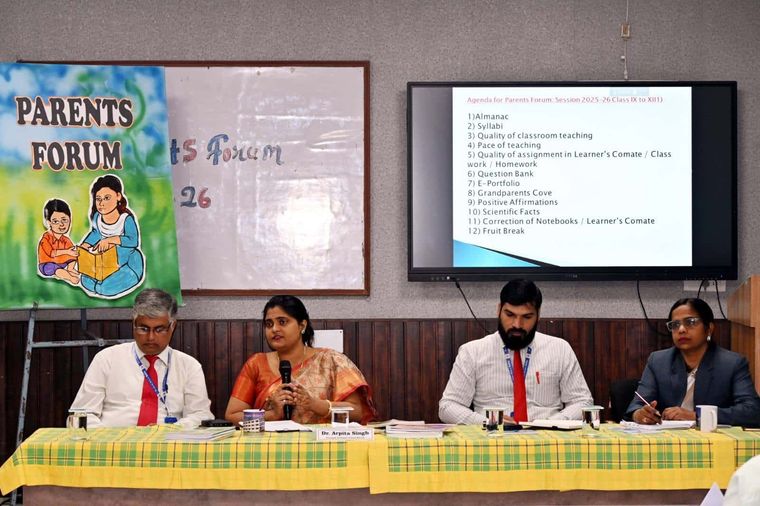


Parent–teacher meeting
Parents’ forum
Any parent can put an item forward — in the meeting, or in writing beforehand if it is easier.
It is discussed with other parents present, which is what separates a shared concern from a one-off.
The school responds to the room rather than to one family, so every parent hears the same answer.
What was agreed comes back to the next session, so an item cannot quietly disappear.
[03 · Workshops & training]
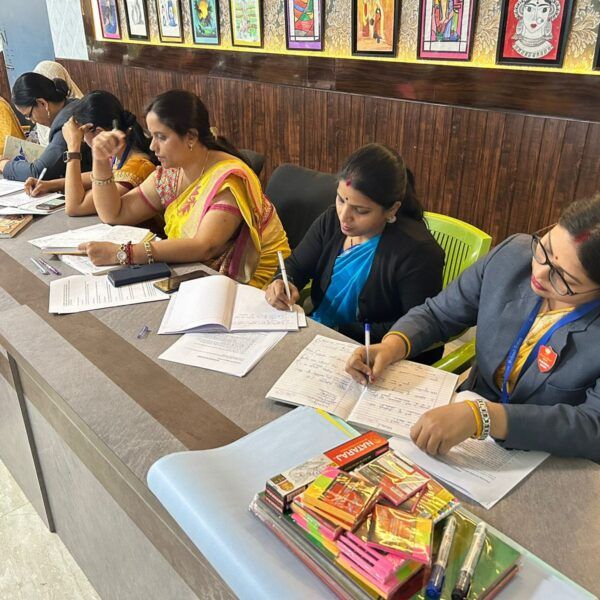
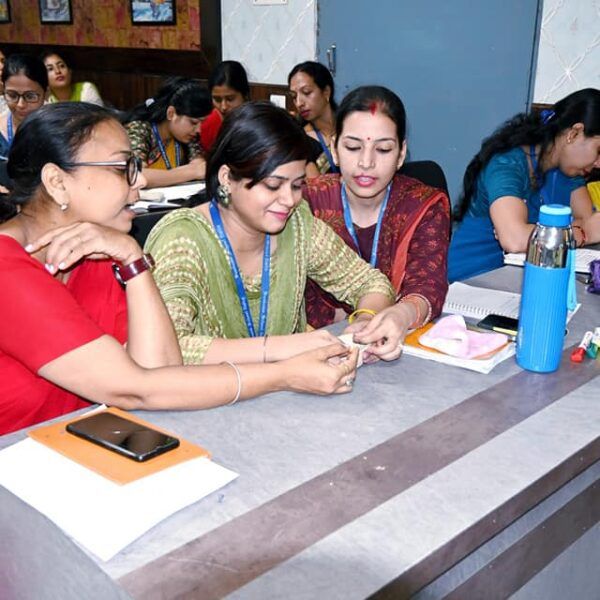
Professional development is easy to assert and hard to check. Every session below names the trainer, and most name the institution they came from. They are run for teaching and administrative staff — the school publishes no parent workshop programme.
4 topics
For parents
Session 01
3 topics
For parents
Session 02

2 topics
For parents
Session 03

3 topics
For parents
Session 04
2 topics
For parents
Session 05

3 topics
For parents
Session 06
[04 · School–parent communication]
Most of what a school tells a family is small and frequent — a date change, an absence, a term report — and it goes wrong the moment it rides on a note in a bag. So each kind of message has one channel, and the same one every time.
Anything that affects the whole school or a whole class — dates, closures, events, changes.
Recorded daily. A pattern is raised with home early rather than at the end of a term.
Set to a published pattern, so the week is predictable at home rather than a surprise each evening.
Term reports and results, through your own login — the record in one place, at any hour.
Parent engagement
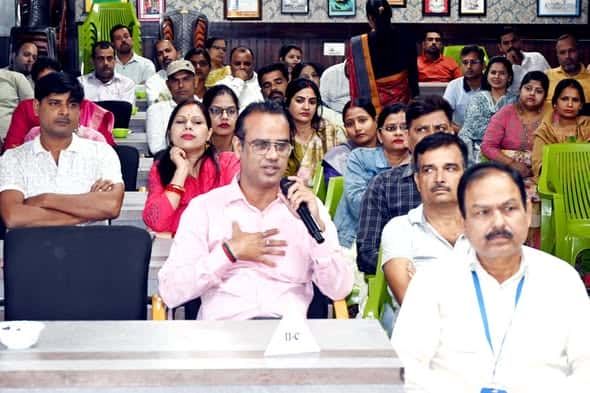
The way this school brings parents in is visible on its furniture. In its own photographs of the Parents’ Forum, every place carries a class nameplate — Nursery, KG-I A, II-C, II-E, III-A — so a parent is not attending in general. They are sitting for a class.
It means a concern about one section arrives as that section’s concern rather than as one family’s, and that every class has somebody in the room whether or not its parents knew to come.

6 questions the admissions desk hears most
Frequently asked
Answered once and published, so no family has to ring to find out something another family already asked.
Applications for Nursery to Class IX and for Class XI are made through the school’s online form. The admissions desk confirms the dates for a given session — they are the people to ask rather than a forwarded message.
Apply online (opens in a new tab)The fee structure is set per class and per session, and the school publishes it rather than quoting it case by case. Ask admissions for the current schedule for your child’s class — that way you get the figure that applies to you, not a general one.
Fee structureThe school runs bus routes across Ballia. Whether one passes your area, and where the nearest stop is, is a route-by-route answer — the transport in-charge holds the current list.
Transport and routesSafety covers the campus, the buses and the school day between them. The measures in place are set out in full rather than summarised here, because a parent asking this question deserves the detail.
Safety and securitySunbeam School Ballia is affiliated to the Central Board of Secondary Education, Delhi, as a co-educational senior secondary school — CBSE affiliation number 2131962, school code 70205.
Affiliation detailsThey are on the academic calendar before the session starts, so the dates are known in advance rather than announced a week out. The calendar carries terms, holidays and examination dates alongside them.
Academic calendar[Through the year]
Six fixed points between admission and the final report. Each one is on the calendar before the session starts.
The application, the paperwork, and the first conversation with the school.
Before teaching begins — the campus, the staff, and how the year will run.
The first parent–teacher meeting, on the published academic calendar.
Circulars, attendance and homework through the standing channels.
Sessions for parents alongside the teaching year.
Term reports and results through the parent portal, and the year read back.
