
Teaching Methodology
Three things, named by the school — and not one of them is a special lesson.
The method, in the school’s words
In all areasof teaching.
Sunbeam School Ballia states its method in one sentence, and the last few words are the part that matters:
“Incorporate Technology, a theory of Multiple Intelligence and Collaborative learning in all areas of teaching.”
Three things, and none of them a timetabled slot. There is no collaboration lesson and no multiple-intelligence week — the claim is that all three run through ordinary teaching, which is a harder thing to promise and a harder thing to fake.
The three, unpacked
Named, and each oneanchored to something
A method is only worth reading if each part of it points at something checkable. All three of Sunbeam’s do — two to the Principal’s own published words, and one to a certification held by a hundred members of staff.
-
Technology
100 Microsoft Innovative Educator Experts
The certification that makes Sunbeam a Microsoft Showcase School. The rooms it runs in are set out on Smart Classrooms & Digital Literacy.
-
Multiple Intelligence
“All the students do not have the same talents.”
Teaching that looks for different strengths, not a single mould.
-
Collaborative Learning
Classrooms as “places of curiosity and collaboration.”
Learning with others, from others, because others think differently.
What collaboration looks like when it is real
One basketof thread.
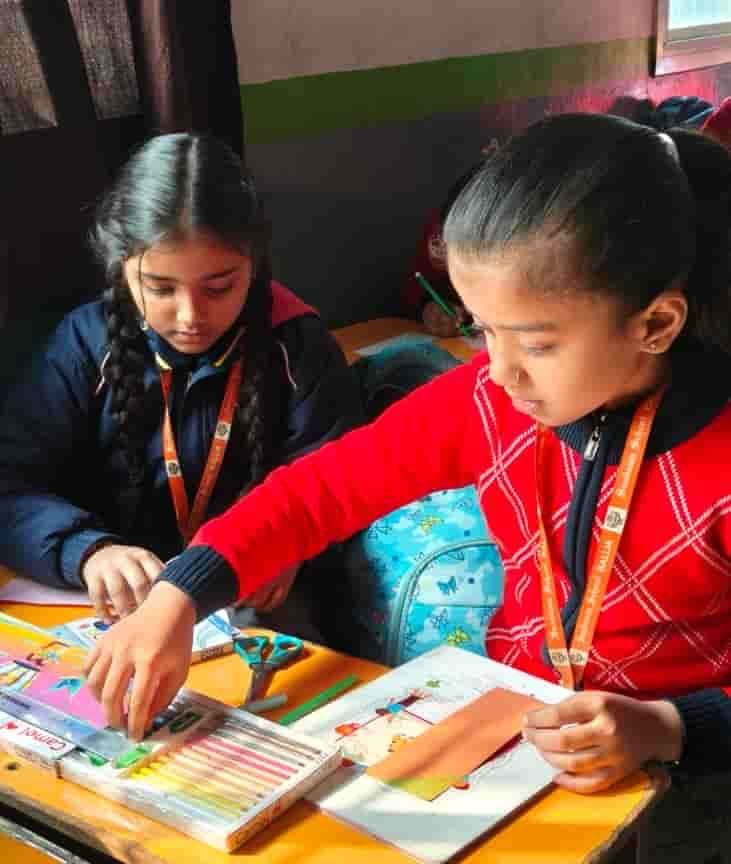
The word “collaborative” survives on most school sites without ever touching a photograph. Here it does.
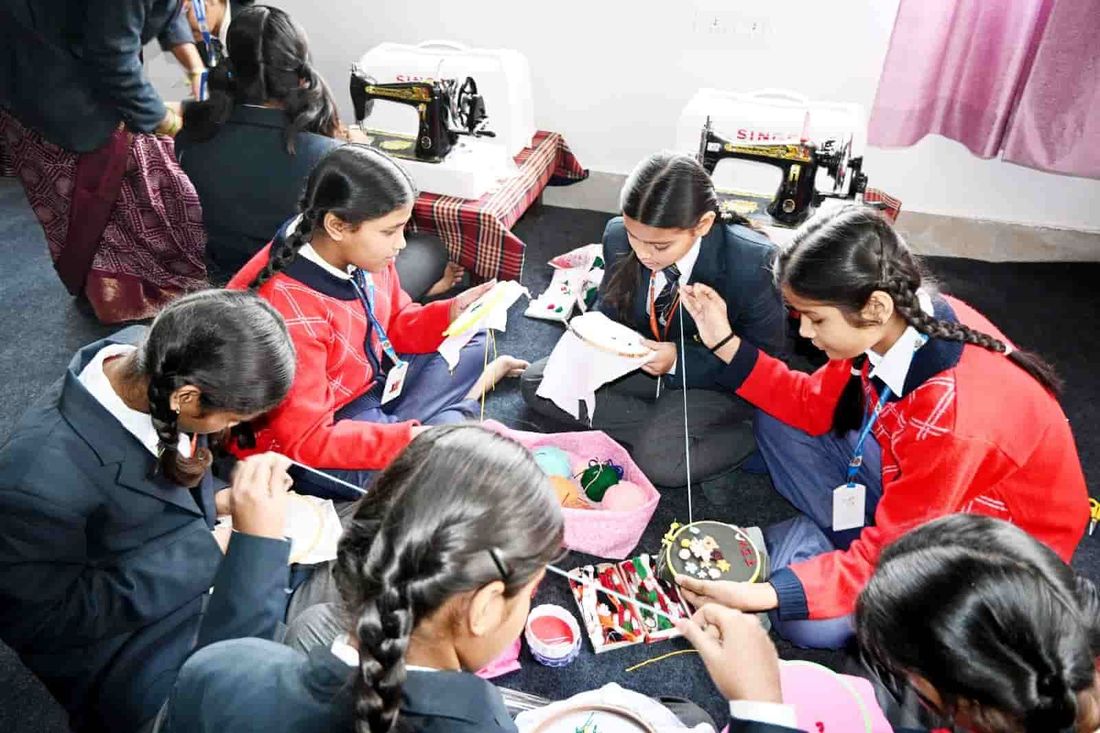
In the school’s own embroidery session the students are not each issued a kit — they work from one shared basket of thread, which means the thing a child needs next is in somebody else’s hand.
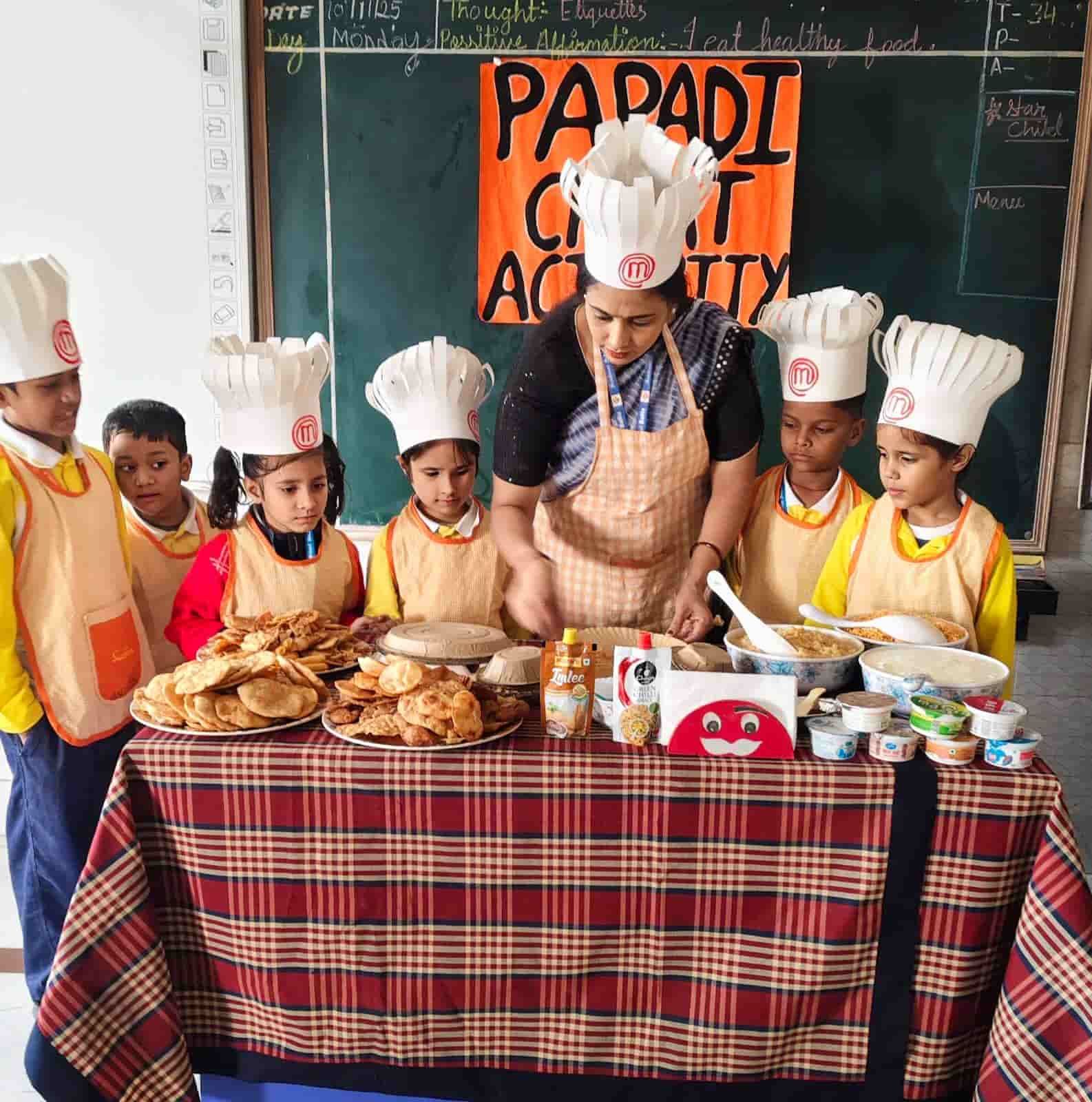
The cooking activity is built the same way: one demonstration table, a class in paper chef hats around it, and no version of the task that can be completed alone.
Neither is a lesson called Collaboration. That is the school’s point — it is in the shape of an ordinary activity rather than in a slot on the timetable.
And the second of the three
Different talents,different platforms.
“All the students do not have the same talents” is easy to say and expensive to act on — acting on it means running enough different things that a child who is not academic still has somewhere to be good. The school’s own published record is the evidence.
-
01
Speaking
Class I entered an inter-branch Attire Speak competition; Class IV took the top three places in a group-wide declamation.
-
02
Making
Folk painting under Impetus, embroidery, and the Srijan making-and-design room.
-
03
Building
The Robotics Lab, and a second place at an international robotics championship.
-
04
The field
Kho-kho gold, chess, handball, taekwondo — a sporting record stronger than most.
Three things,everywhere.
The school publishes its method, the Principal’s words behind two of the three, and the certification behind the first. It does not publish lesson plans, a scheme of work, or an observation framework — so no lesson shape is described here.