

Laboratories & Academic Clubs
Specialised spaces where ideas, curiosity and learning come to life.
One subject, one space
A room forone subject.
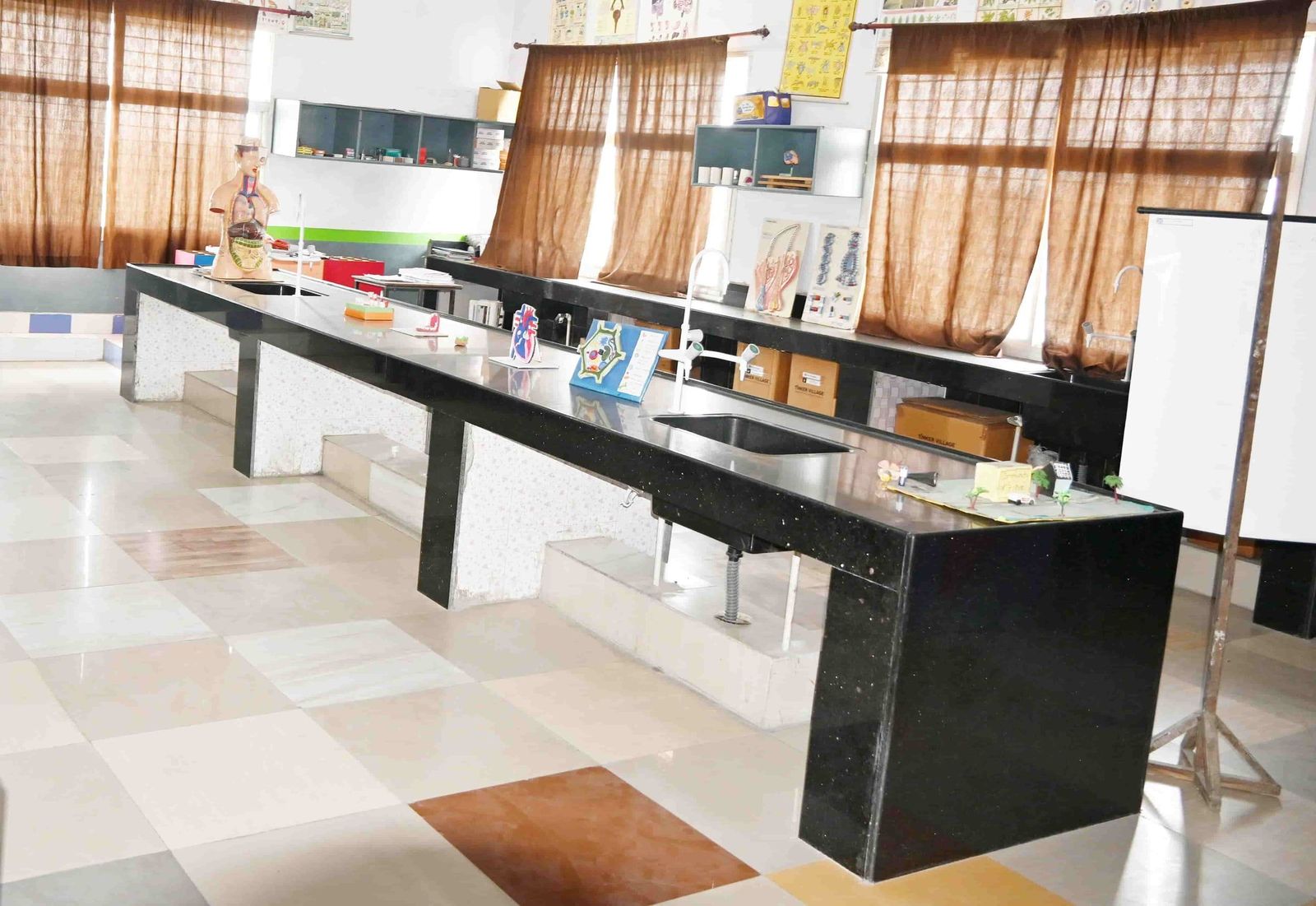
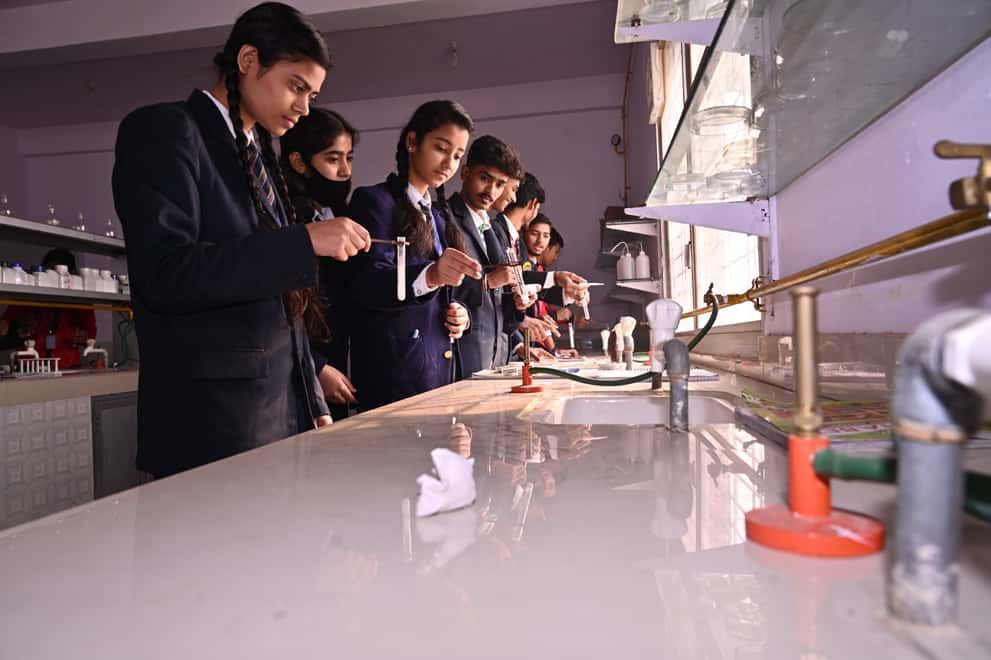
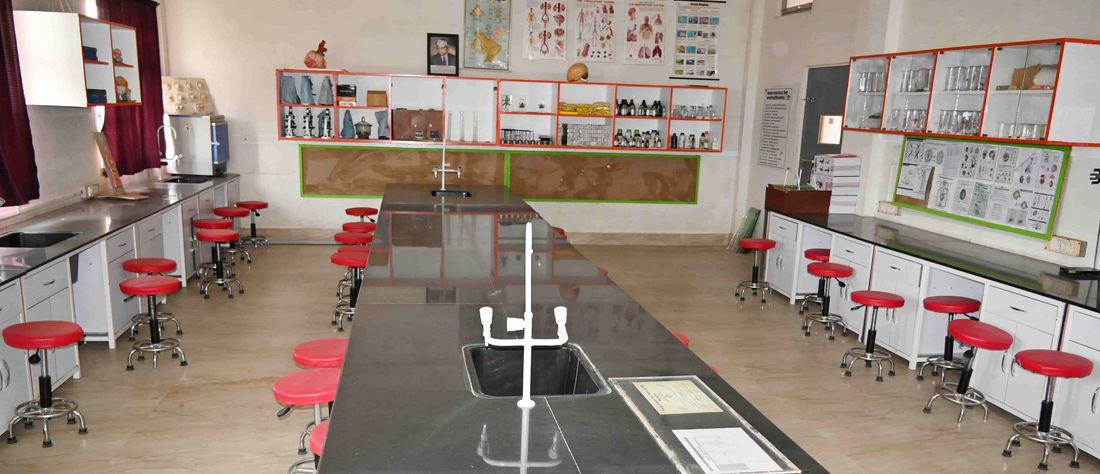
Twelve is only a number until you know what kind of rooms they are. The distinction that matters is specialised against general: a chemistry laboratory with gas taps, a fume path and reagent shelves is a different object from a science room with a sink at the back — and only one of them lets a class run a practical the board expects.
Physics, Chemistry and Biology each carry board practicals from Class IX to Class XII. The mathematics laboratory is the one most schools do without: its purpose is to make mathematics something handled rather than only argued on paper.
-
12
Laboratories
-
One subject
One space
-
Hands-on
Learning
-
Safety & care
Always
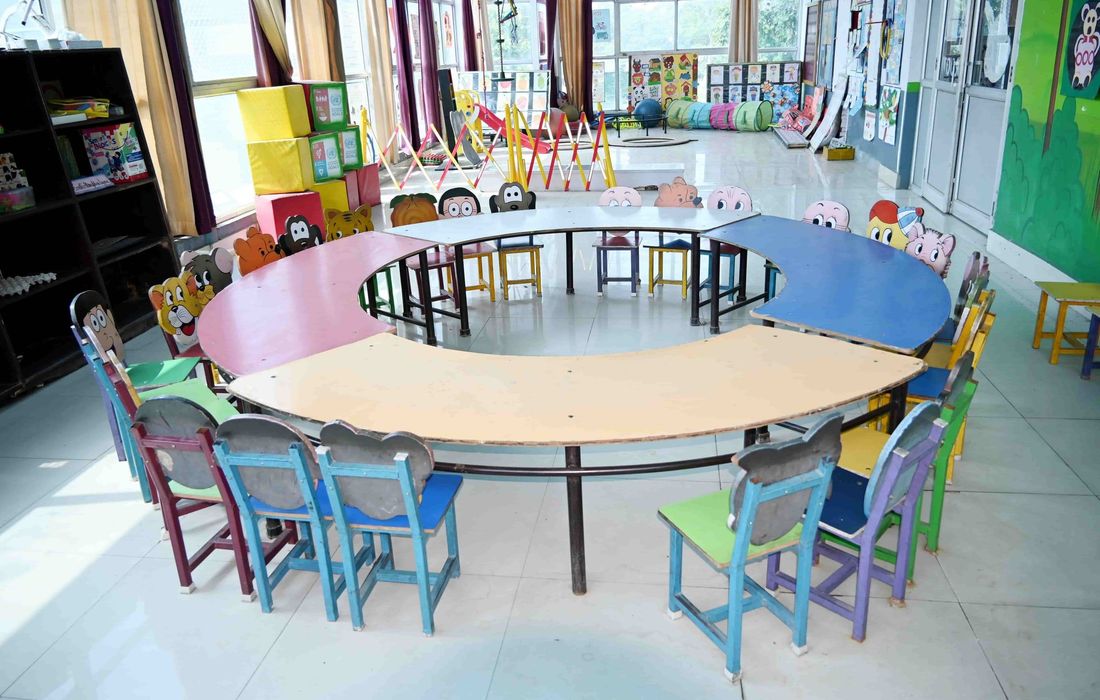
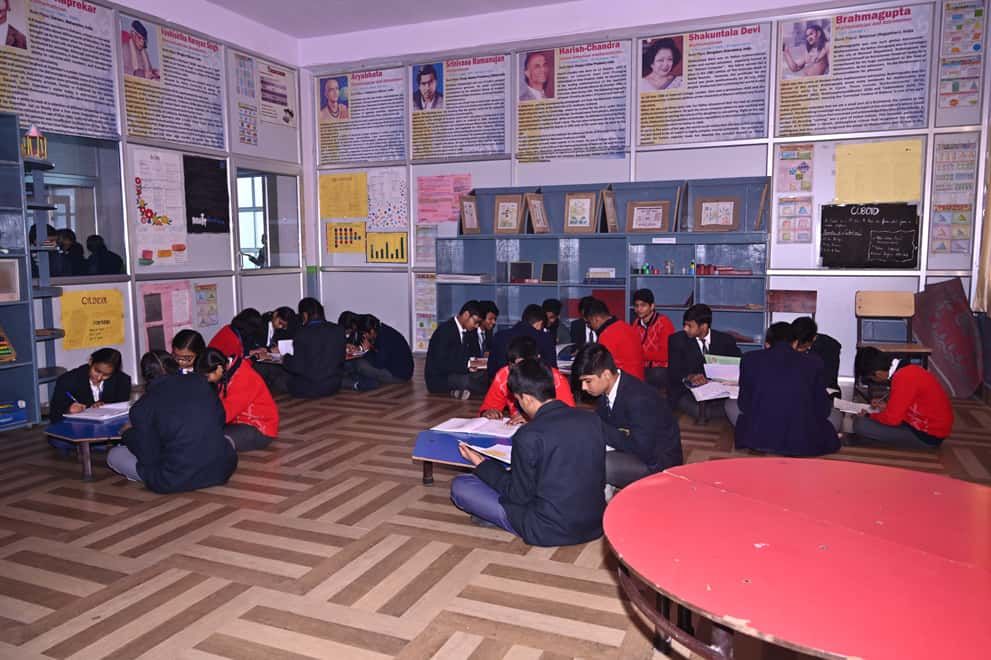
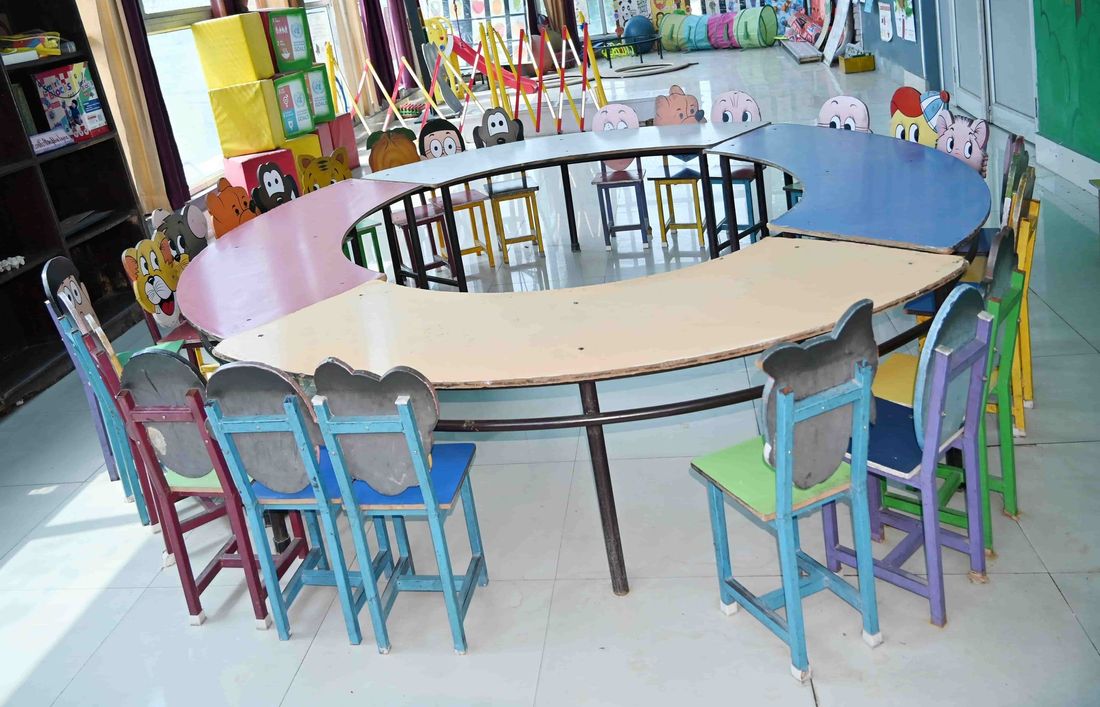
The spirit of academic clubs
Twelve,and four of themare not labs.
The school enumerates its twelve rooms by name, and four of the twelve are inquiry rooms rather than subject laboratories — counted inside the twelve, not added to it. A school that spends four of twelve on debate, making, maps and open-ended work has chosen to give space to the subjects that do not sit an exam.
-
Physics
Board practicals, IX–XII.
-
Chemistry
Gas taps, reagent shelves.
-
Biology
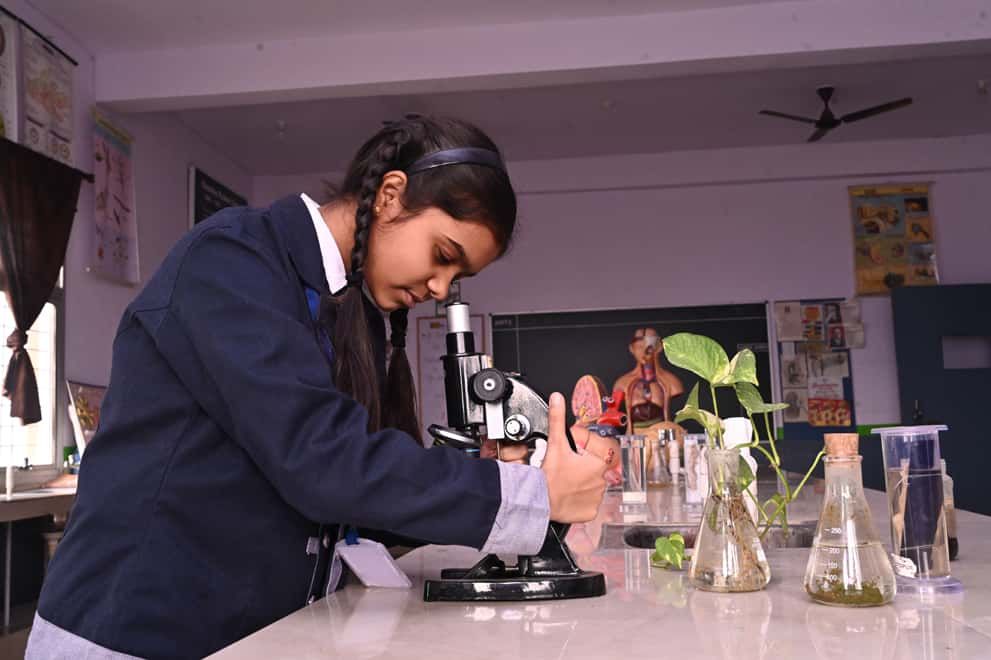
Microscopes and models.
-
Mathematics
The room most schools skip.
-
Language
Recorded, then reviewed.
-
Robotics
Drone · printer · telescope.
-
Computer lab · junior
40+ machines.
-
Computer lab · senior
40+ machines.
-
Geography Inquiry
Maps, instruments, fieldwork.
-
Srijan Inquiry
Making and design.
-
Model United Nations Inquiry
Debate and committee.
-
Active Learning Inquiry
No single right answer.
The Robotics Lab is set out on STEM, Robotics & Enrichment; the language laboratory on Reading, Language & Library.
Built to support real learning
Rooms for the workwith no right answer.
Great learning does not come from memorising. It comes from asking, trying, failing safely and trying again — which needs rooms built for experimentation, discussion, making and practical work rather than for listening.
-
01
Science laboratories
Physics, Chemistry, Biology and Mathematics — practical spaces, not a science room with a sink.
-
02
Computer laboratories
Junior and senior, 40+ machines each.
-
03
Language lab
Spoken language, practised aloud, recorded and reviewed.
-
04
Academic clubs & spaces
The four inquiry rooms — Geography, Srijan, Model UN and Active Learning.
Different rooms.Different questions.One connected idea of learning.
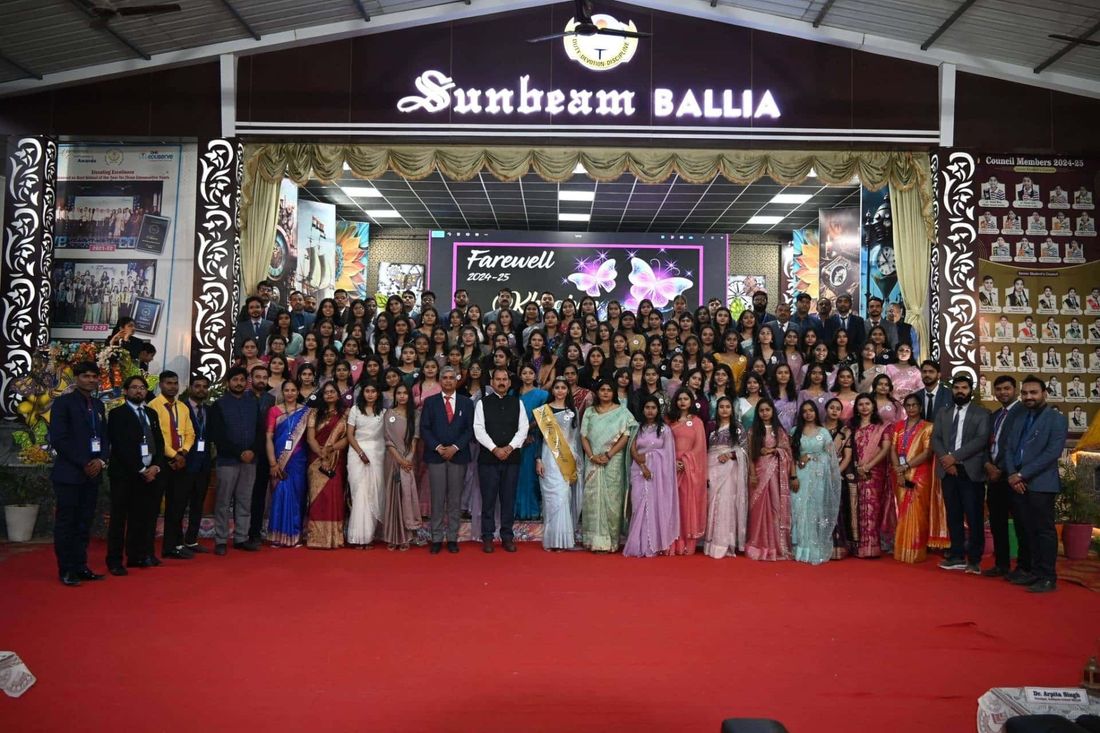
Learning beyond textbooks
Four of twelve,spent on the open questions.
The school enumerates its twelve rooms and names the four inquiry rooms among them. It does not publish club membership, meeting times or who runs each one — and it has published no photograph of the Robotics Lab or of the four inquiry rooms in use.