
Teaching & Learning
Teaching methodology
Three things the school builds into every lesson
The school names them itself: “Incorporate Technology, a theory of Multiple Intelligence and Collaborative learning in all areas of teaching.” Not in a special lesson — in all areas of it.
- 130+
- Teaching staff
- 100
- Microsoft Innovative Educator Experts
-
Technology
One hundred teachers hold Microsoft Innovative Educator Expert certification, which is what makes Sunbeam Ballia a Microsoft Showcase School.
-
Multiple Intelligence
The Principal puts the reason plainly: “all the students do not have the same talents and so each one will achieve success differently.”
-
Collaborative learning
The Principal’s description of the result is a room where children are talking to each other — “classrooms are places of curiosity and collaboration.”
The room itself
Digital is the default here, not a room you visit once a week
- 75+
- Digitally smart classrooms
- 49+
- Interactive flat panels
- 100
- Microsoft-certified teachers
-
Standard equipment, not a room you book
Forty-nine-plus interactive flat panels across seventy-five-plus digitally smart classrooms — not yet one in every room, and the school publishes both numbers so a reader can see that. Where a panel is, a teacher does not book it; it is already where the class is.
75+ smart classrooms · 49+ interactive flat panels
-
The certification is the teachers, not the hardware
A screen changes nothing on its own. One hundred of the school’s teachers are certified Microsoft Innovative Educator Experts, which is what makes Sunbeam Ballia a Microsoft Showcase School.
Microsoft Showcase School
-
AI arrives as a subject, not a slogan
Digital literacy here means reading a tool critically as well as using it. The school does not have to argue that this reaches students: one of them won a national AI festival from Class VII.
Indian AI Impact Festival 2024 — first place, Ayushi, Class VII
Experiential & project-based
Met in the hand before it is met in the exam
Experiential learning is the plainest idea in teaching and the hardest to timetable: a concept is understood after you have done something with it, not after you have been told it. It needs rooms, apparatus and time, which is why it is usually the first thing a crowded syllabus drops.
Project work is the longer form of the same idea. A project runs past a single period, has a real output at the end, and cannot be completed by remembering — which makes it the closest thing a school has to the work students will actually do afterwards.
- Twelve laboratories
- Physics · Chemistry · Biology · Mathematics · Language · Geography · Srijan · Model UN · Active Learning · Robotics · two computer labs
- KIDS entrepreneurship
- The school’s own programme, taken in Class VII
- Inquiry rooms
- Srijan · Model United Nations · Geography · Active Learning
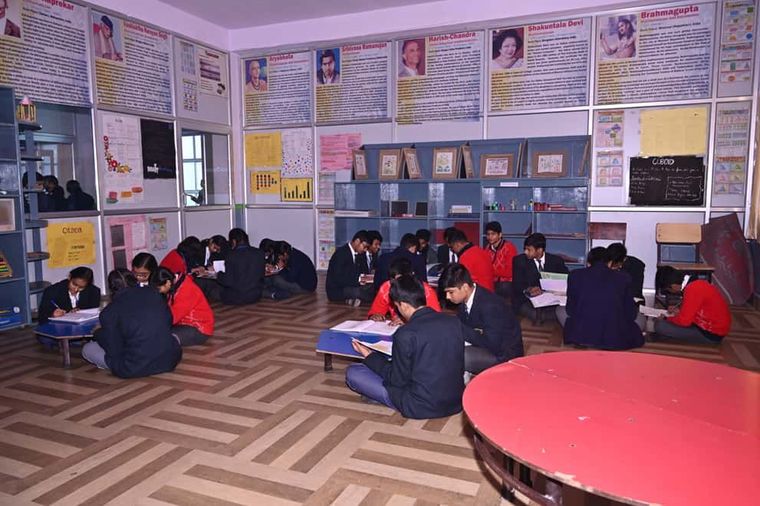
STEM, robotics & enrichment
Where the science actually happens
Six rooms and programmes, in the order a student meets them. Scroll the rail.
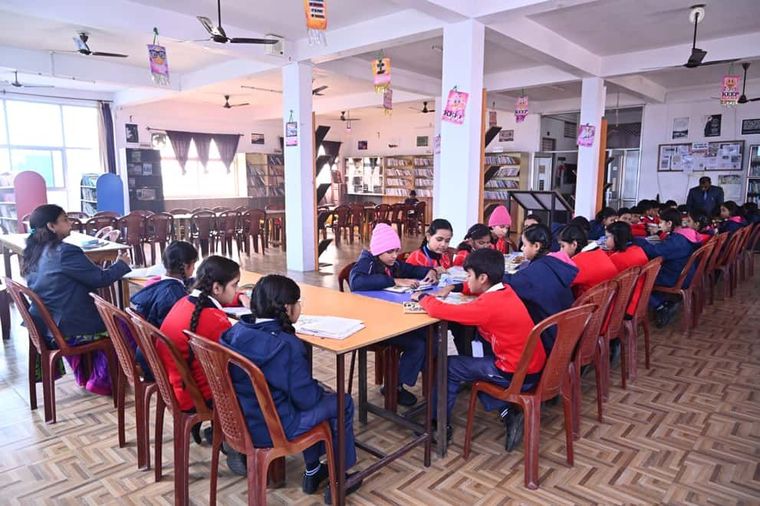
17,574 Books in the Nalanda Library
Reading & language
Fifteen thousand books, and a room to read them in
A reading habit is the one advantage that compounds across every other subject. It needs stock, a place to sit, and time on the timetable.
-
Library programme
The Nalanda Library holds more than fifteen thousand books alongside twenty-five periodicals, in a reading room rather than a store cupboard.
17,574 books · 25 periodicals
-
Reading programme
Reading is treated as a taught skill with a room and a stock behind it, not as homework that happens somewhere else. Periodicals matter here: they are how a reader finds a subject nobody assigned them.
-
Language development
The school runs a language laboratory as one of its twelve subject labs — language practised aloud and recorded, which is the part a textbook cannot do.
Language laboratory
The full inventory
Every room, listed plainly
Twelve laboratories, and the inquiry rooms and academic clubs that work alongside them. No room appears on this list that the school does not publish.
Subject laboratories
- Physics Board practicals, Classes IX–XII
- Chemistry Board practicals, Classes IX–XII
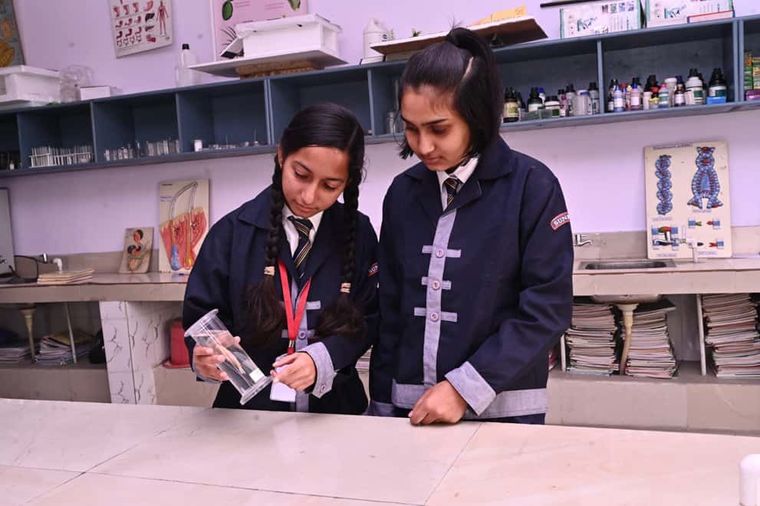
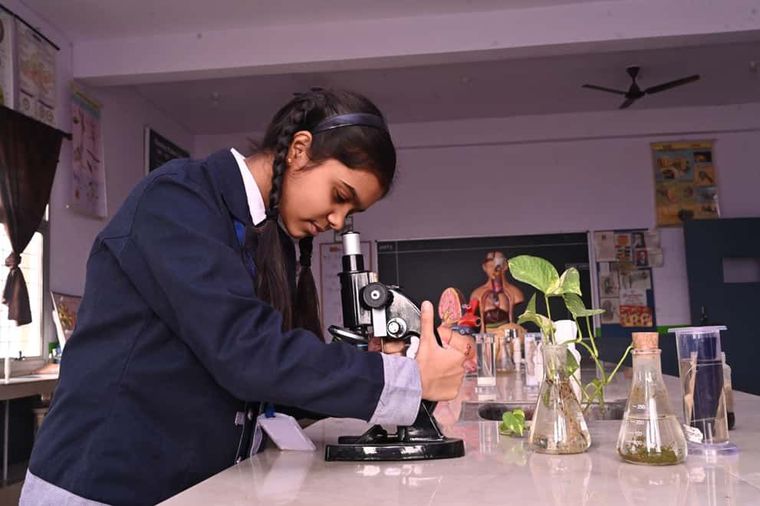
- Biology Board practicals, Classes IX–XII
- Mathematics Mathematics as a practical subject
- Language Spoken language, recorded and reviewed
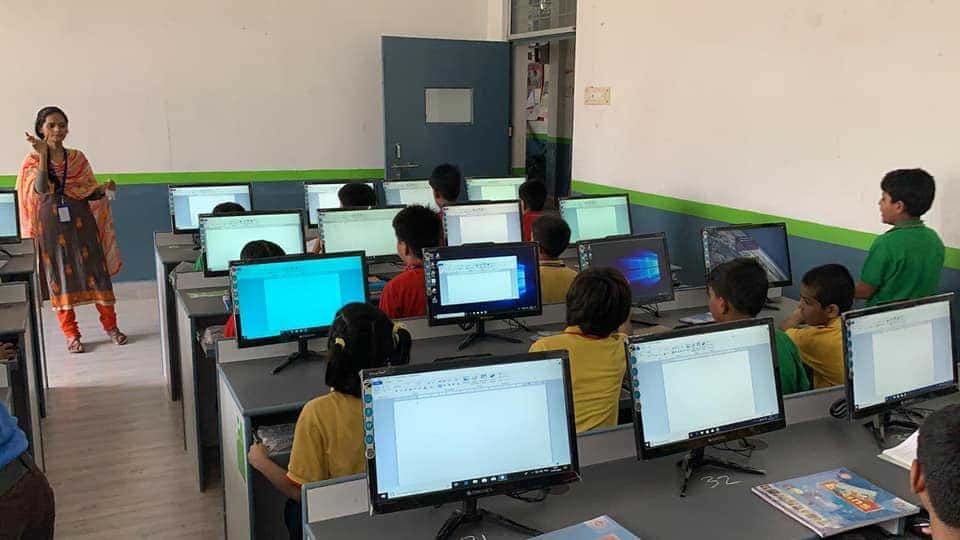
- Computer — junior 40+ machines
- Computer — senior 40+ machines
- Robotics Drone · 3-D printer · telescope · embedded systems
- General science Middle-school practical work
Inquiry rooms · academic clubs
- Srijan Lab Making and design
- Model United Nations Lab Debate, position papers, committee
- Geography Lab Maps, instruments, fieldwork
- Active Learning Lab Work with no single right answer
Photography of the Robotics Lab is still outstanding. The repository holds a stock drone image that would fit the slot, and using it would misrepresent a room this school genuinely has. Request A2.