

STEM, Robotics & Enrichment
Named rooms and entered programmes — and a drone that came second in Malaysia.
Where science happens
Rooms built forone subject each.
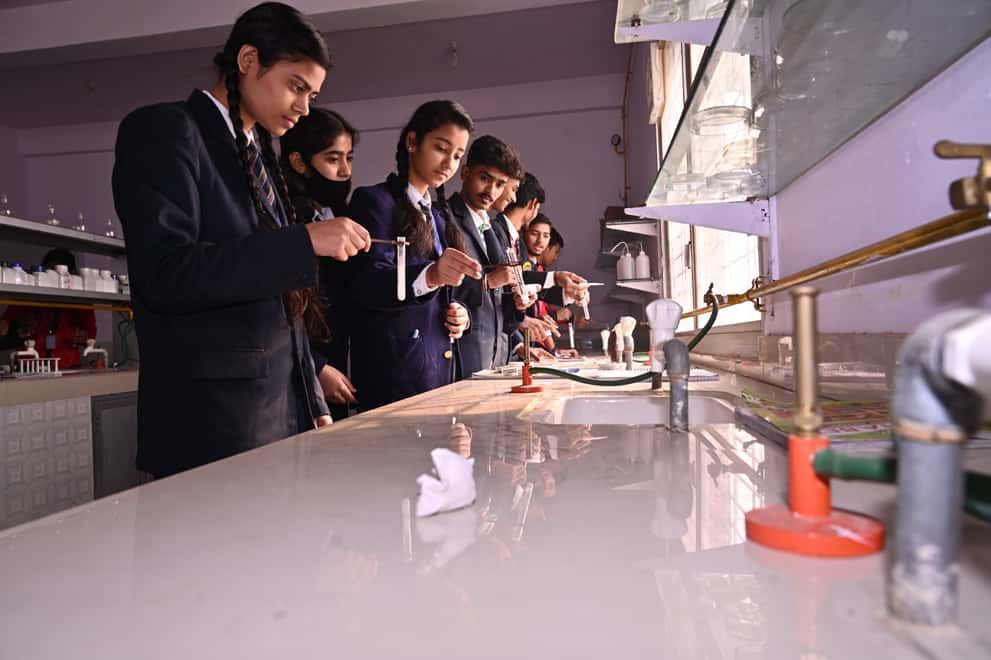
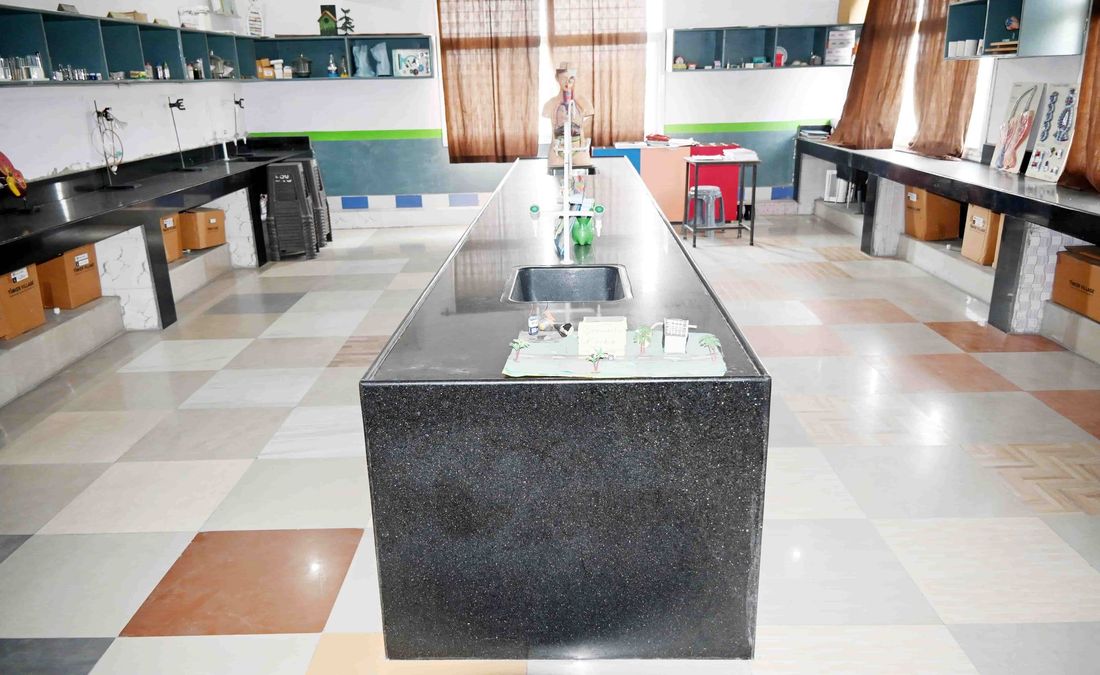
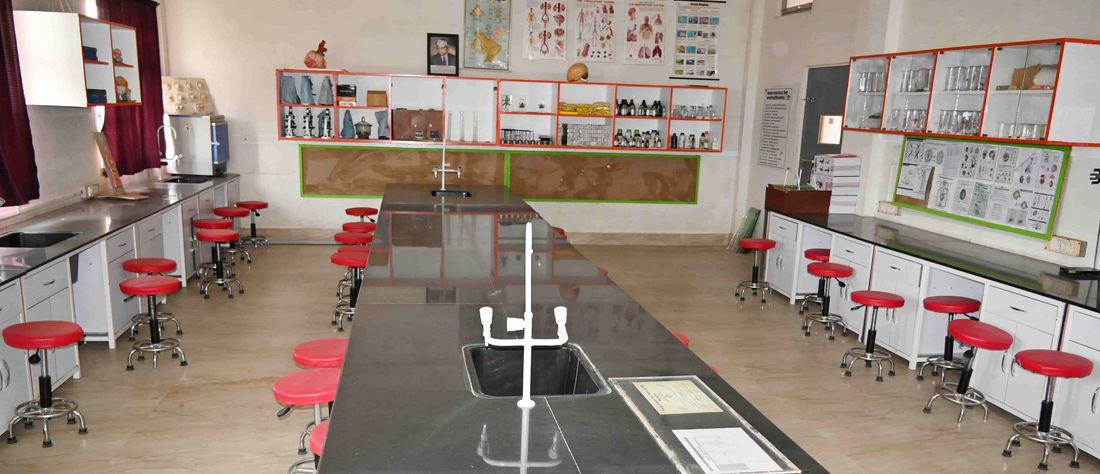
Sunbeam’s STEM provision is a set of named rooms rather than a claim about a culture. Physics, Chemistry and Biology each have a laboratory of their own, carrying board practicals from Class IX to Class XII — a chemistry bench with gas taps and reagent shelves is a different object from a science room with a sink in it.
The mathematics laboratory is the one most schools do without. Its purpose is to make mathematics a practical subject — something handled rather than only argued on paper — which is a harder room to justify and a more revealing one to have.
The Robotics Lab
Four thingsin one room.
The school’s description of its Robotics Lab is a single line of four items, and it is more specific than most schools manage: a drone, a 3-D printer, a telescope and embedded systems. No “state-of-the-art”, no “cutting-edge” — four objects, each of which either exists in a room or does not.
- 01
Drone
The machine behind the school’s only international placing.
- 02
3-D Printer
A design that leaves the screen as an object.
- 03
Telescope
The one instrument in the room pointed away from the building.
- 04
Embedded Systems
Where code stops being a screen and starts being a thing that moves.
The school has published no photograph of this laboratory, so the four items are set as type rather than illustrated with somebody else’s room.
STEM in practice
Not just equipment.Students using it.
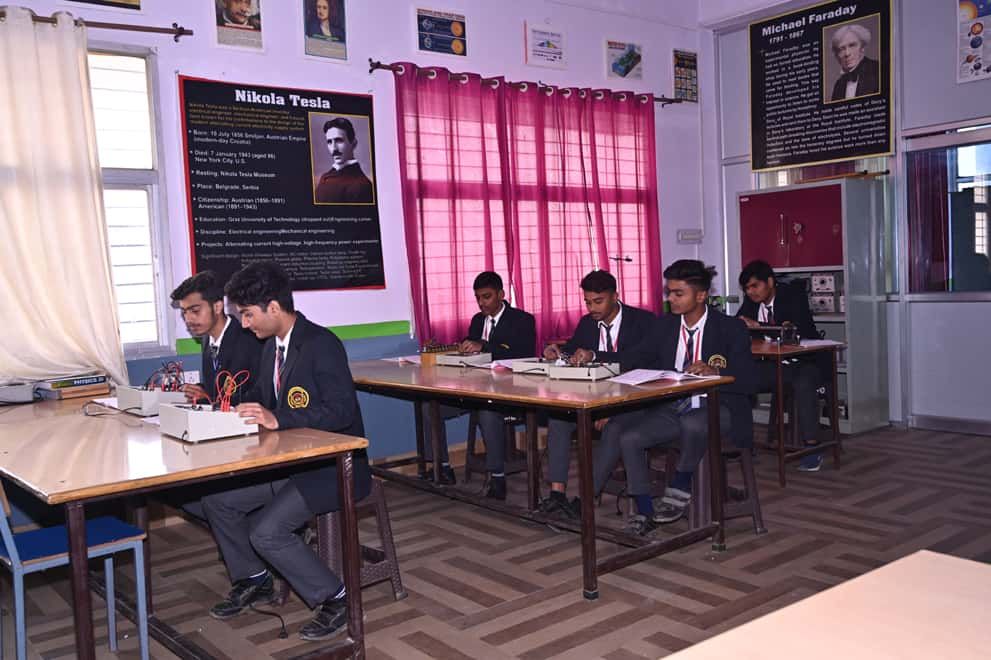
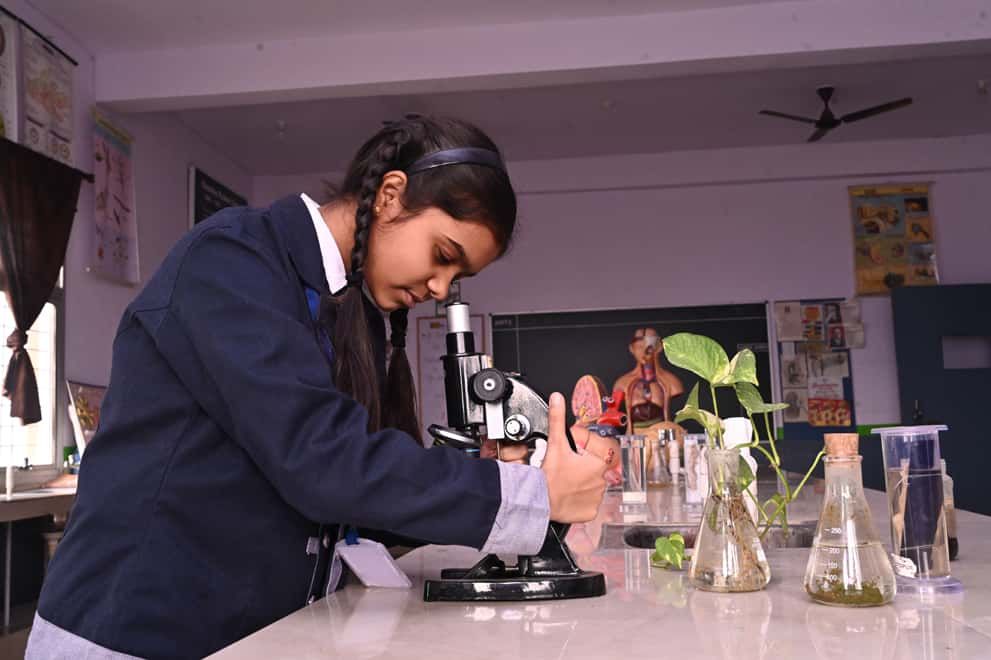
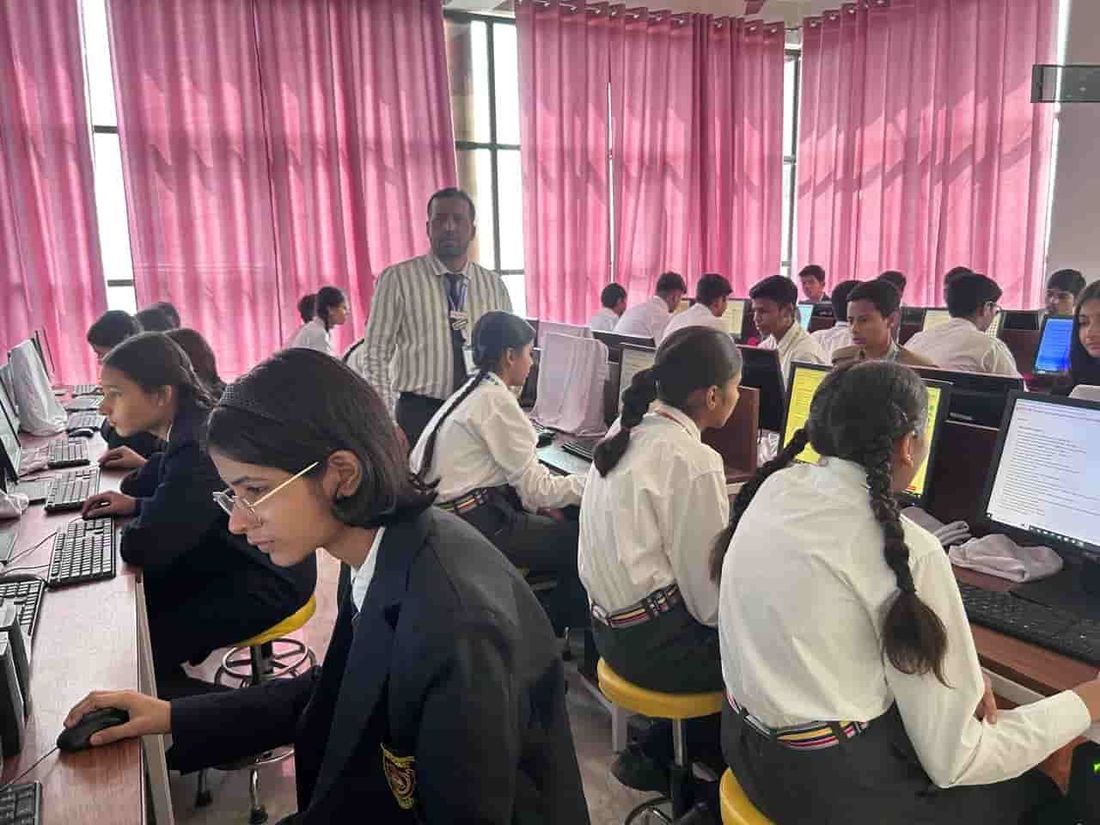
Laboratories are only useful when they are in use. Six frames from the school’s own rooms — each caption says what is actually in the picture.
01 / 06
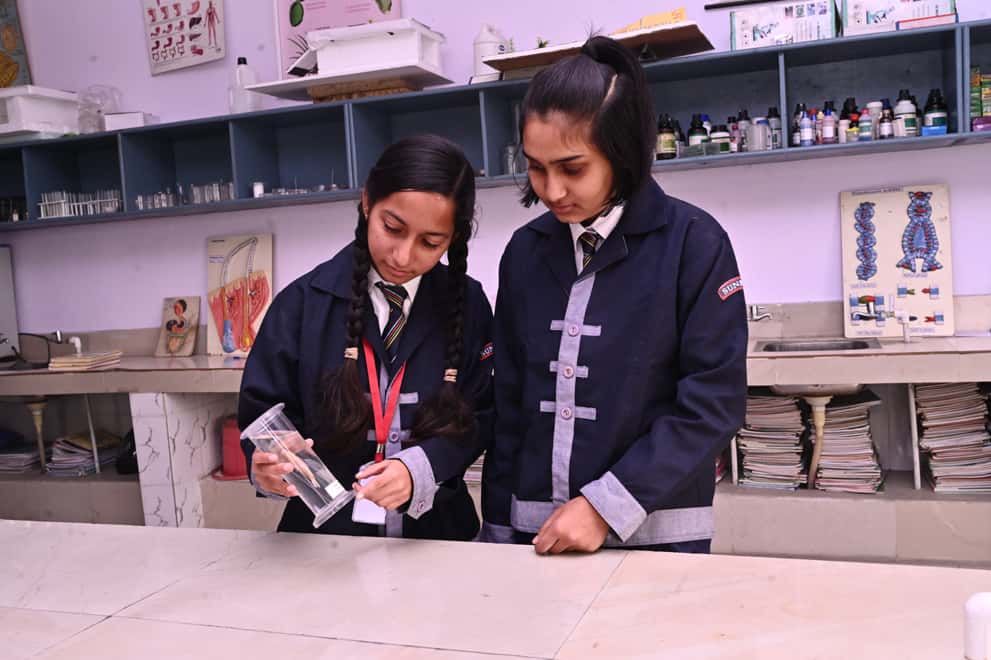
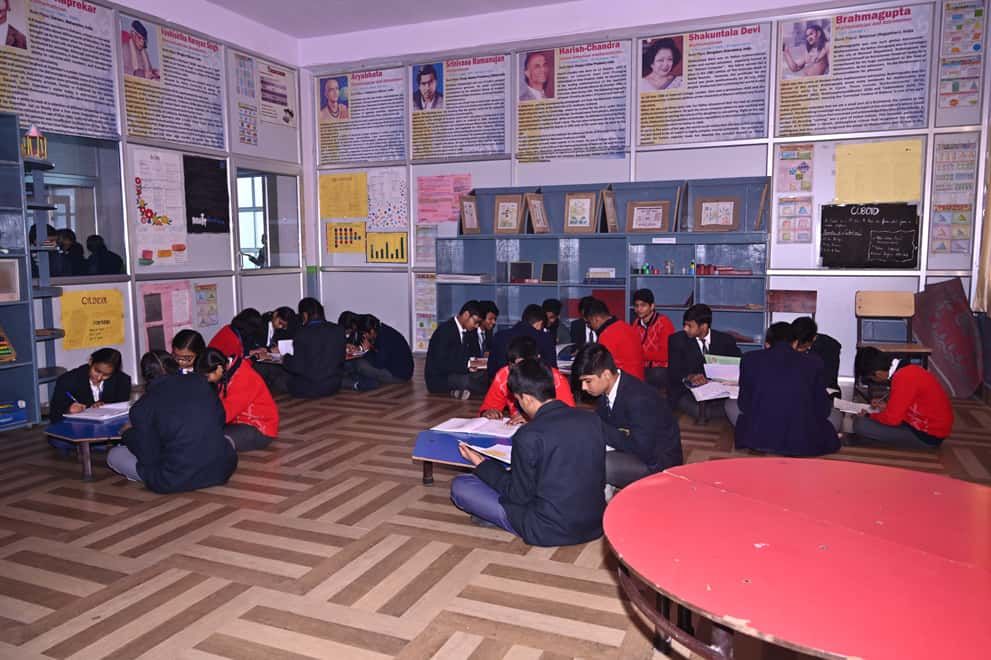
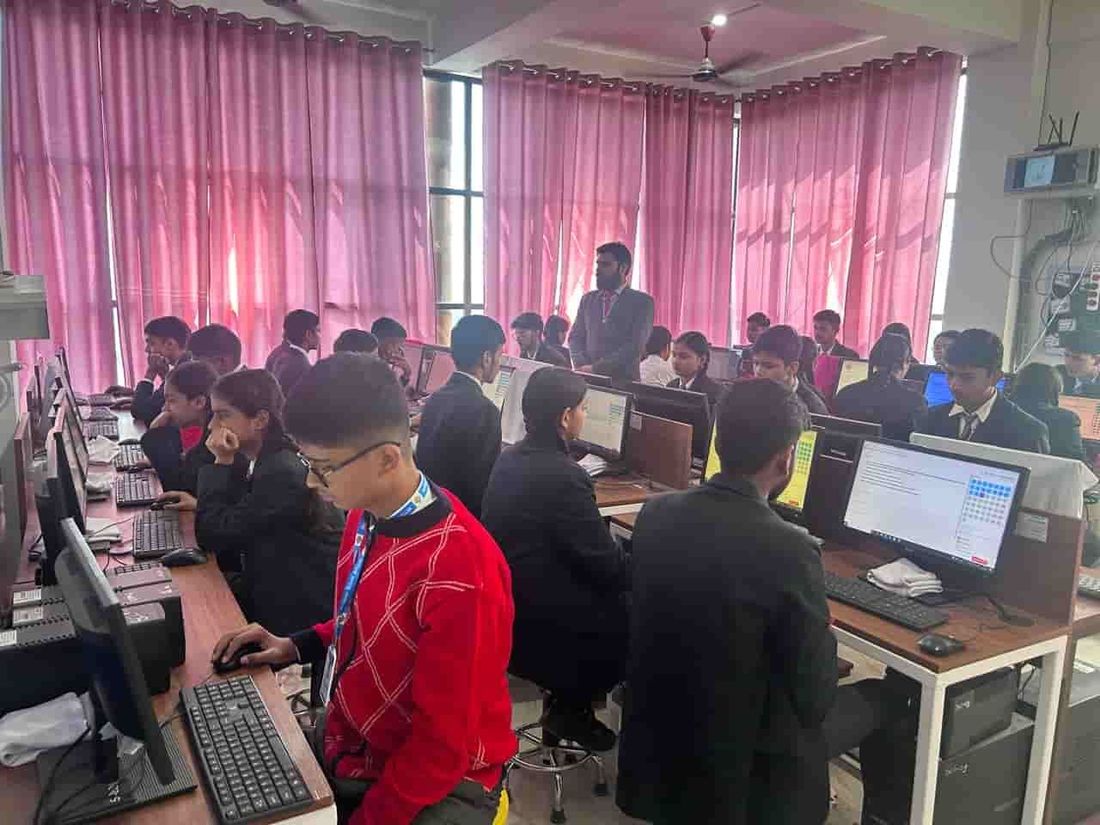
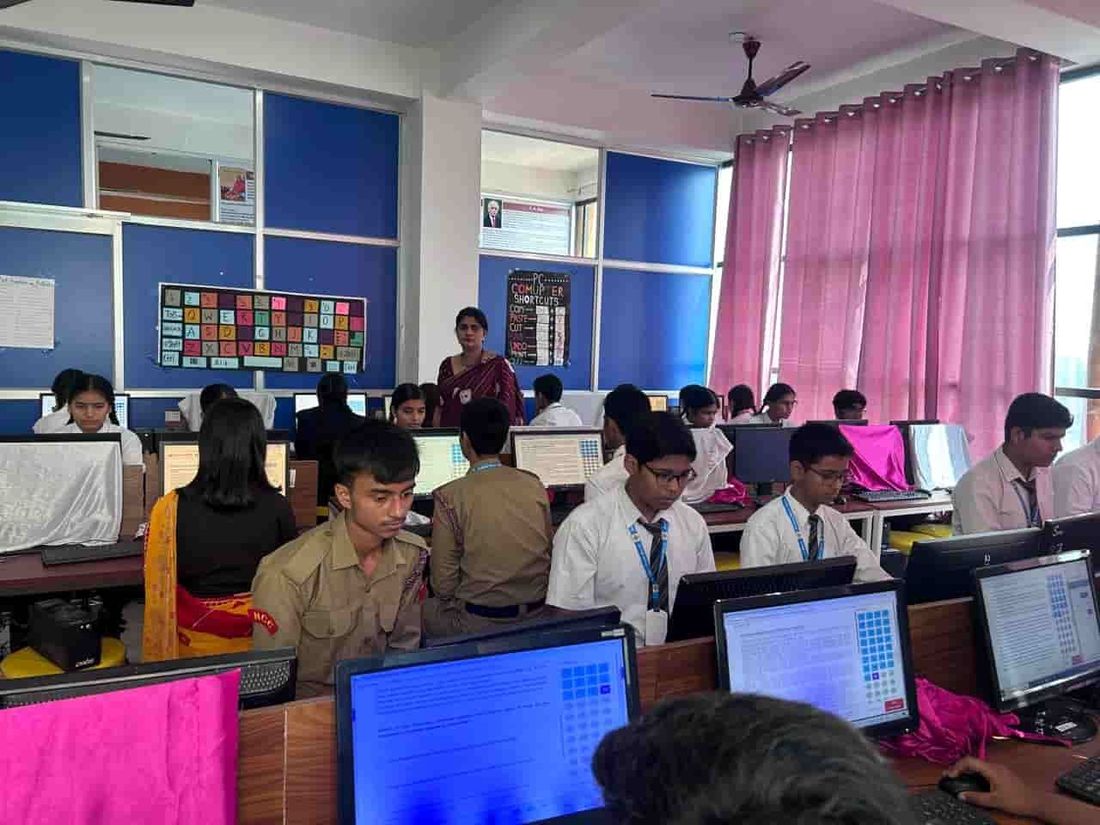
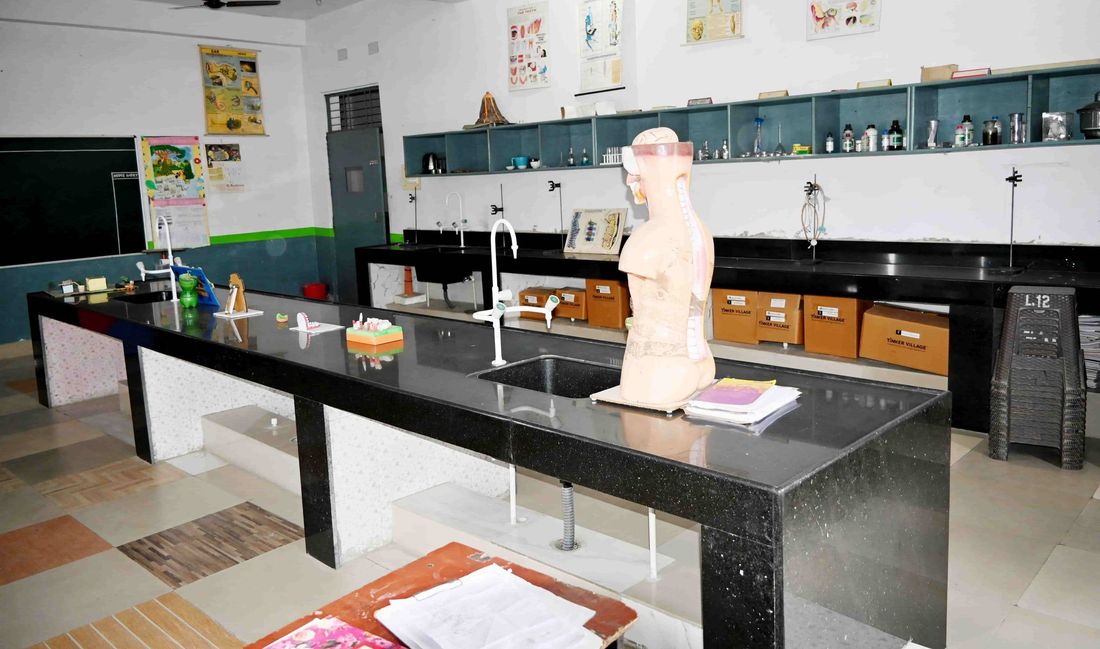
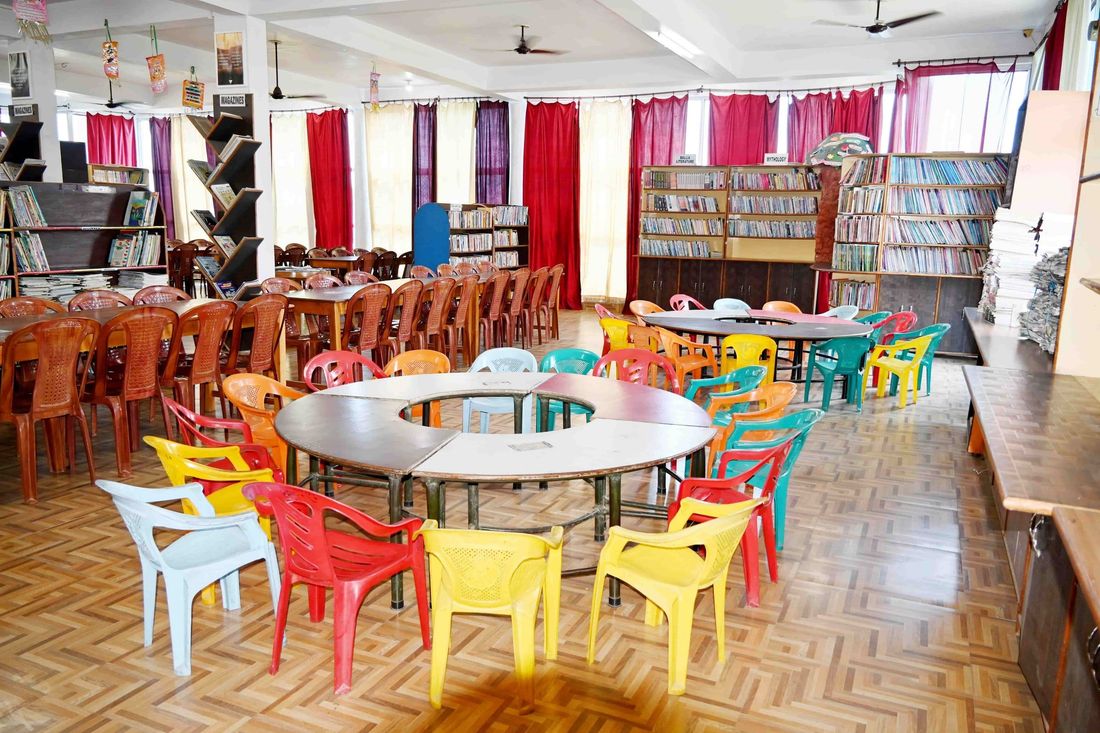
The biology laboratory — a measuring cylinder read at the bench.
The enrichment ecosystem
Many rooms.One purpose.
Different spaces, different tools. One connected idea of learning through doing.
Out of the Robotics Lab: second place at the RoboWunder International Robotics Championship, Kuala Lumpur. The rest is on Student Success.
-
Science
Physics, Chemistry and Biology, with board practicals from Class IX.
-

Making
The Robotics Lab — drone, 3-D printer, telescope and embedded systems.
-
Coding
Two computer laboratories, junior and senior, 40+ machines each.
-
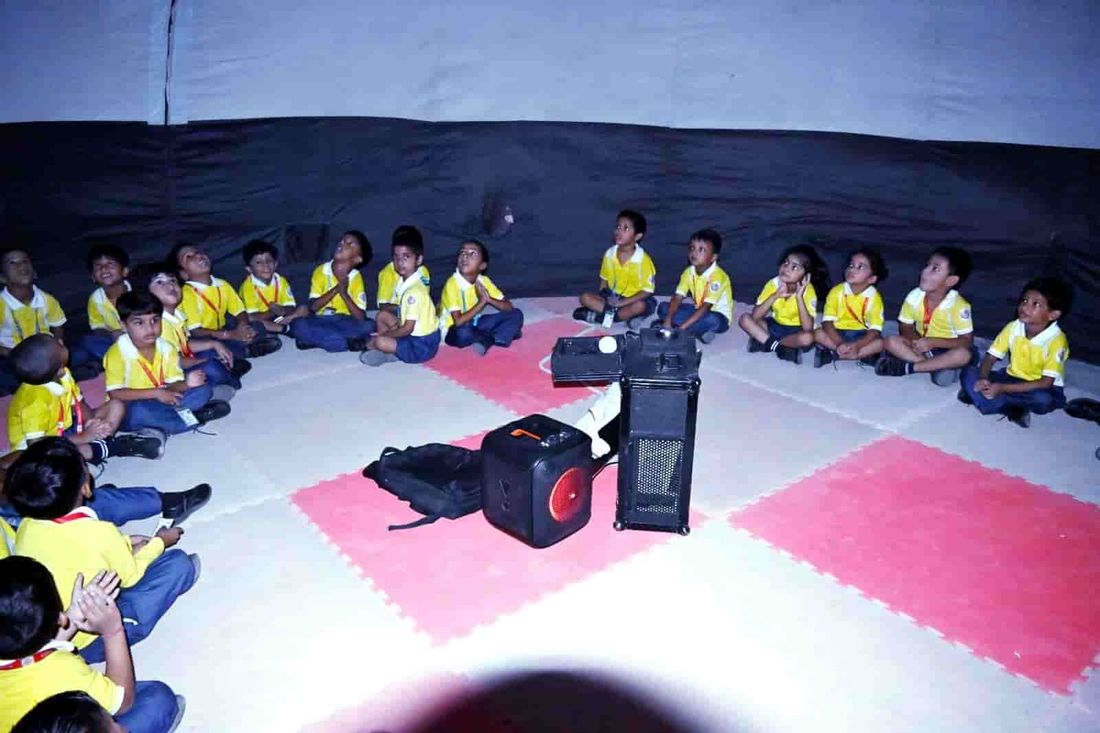
Discovery
Vidyarthi Vigyan Manthan, the Science Congress, Inspire Award MANAK.
Learning beyond the book
Explore. Build.Discover.
The school names the rooms, their contents and the programmes it enters. It does not publish a coding curriculum, which classes take robotics, or club hours — and it has published no photograph of the Robotics Lab itself.
- Explore
- Build
- Discover